Best AI Writing Tools for Solopreneurs 2026: Ranked and Tested
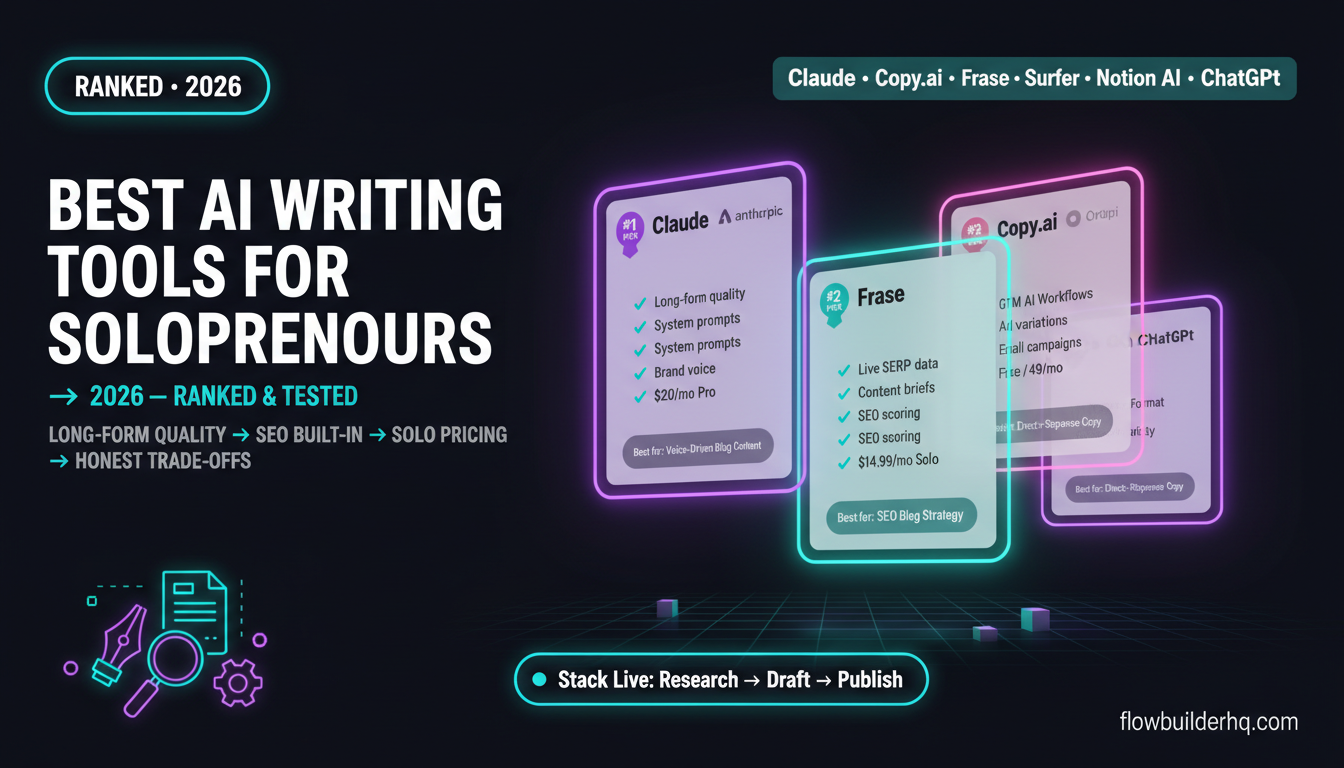
The best AI writing tools for solopreneurs in 2026 are not the ones with the longest feature lists. They are the ones that fit inside a real one-person workflow without breaking the budget or eating hours of setup time. This list cuts through the noise and ranks what actually works for content production, SEO, and copy — with honest trade-offs on every entry.
If you are running your own content engine — blog posts, email sequences, social copy, product descriptions — you need tools that produce usable output fast, not tools that require a full-time prompt engineer to babysit. The seven tools below cover the full range from budget to premium, with a hard con on each one so you know what you are actually signing up for.
How This List Was Built
This ranking is based on public tool documentation, verified user reviews, published pricing, and known capabilities as of mid-2026. Tools were evaluated on four criteria: output quality for long-form and short-form content, workflow integration potential, pricing at solo scale, and honest limitations that product pages will not tell you.
Content type matters here. An SEO blog writer and a direct-response copywriter have different needs. Where a tool shines for one and fails for the other, that is noted.
The 7 Best AI Writing Tools for Solopreneurs 2026
1. Claude (Anthropic)
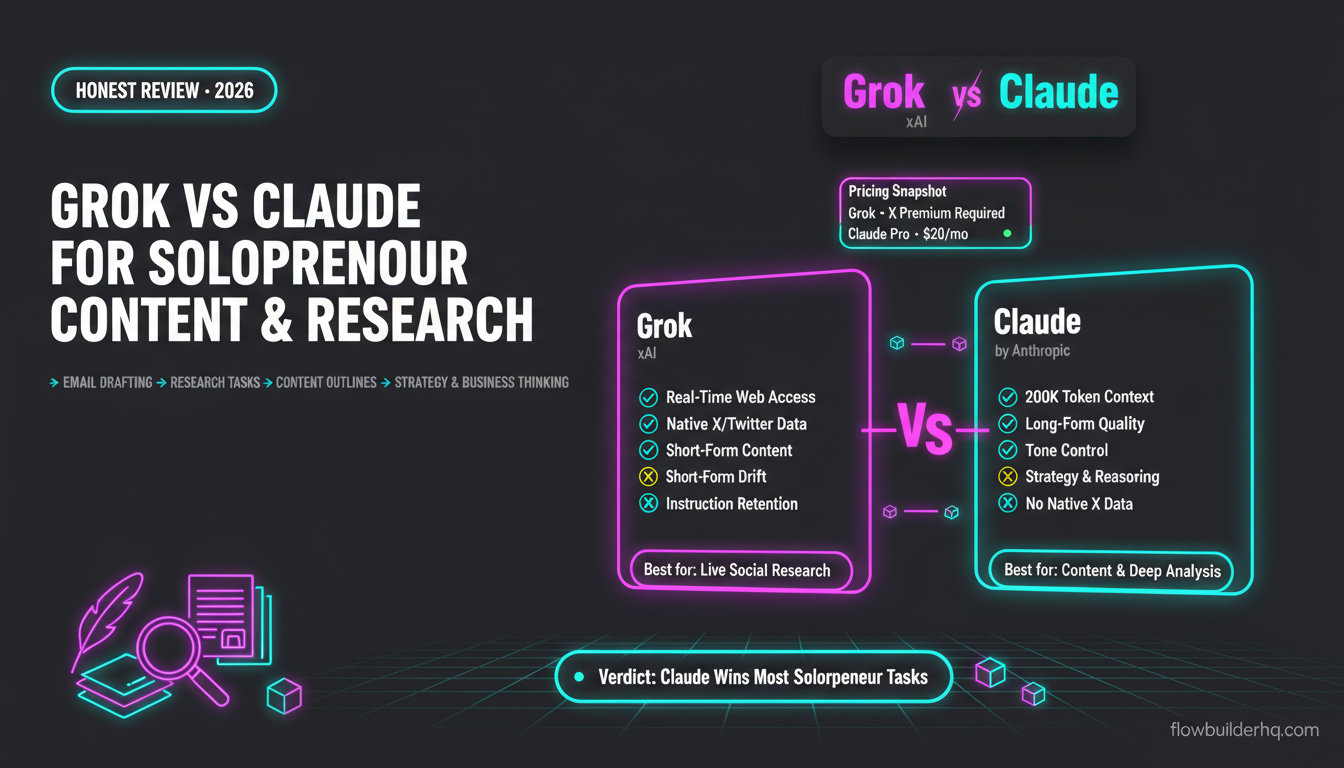
Claude is the strongest general-purpose AI writing tool available right now for solopreneurs who produce long-form content. The output reads like a person who actually thought about the topic — fewer filler sentences, tighter structure, and a noticeably lower rate of the generic phrasing that makes AI content obvious.
Claude handles system prompts well, which means you can build a persistent brand voice once and apply it every session. For solopreneurs who need consistent tone across a blog, email list, and social posts, that matters. The extended context window also lets you paste in existing content, style guides, or rough research and get output shaped around it — not around some default ChatGPT-style template.
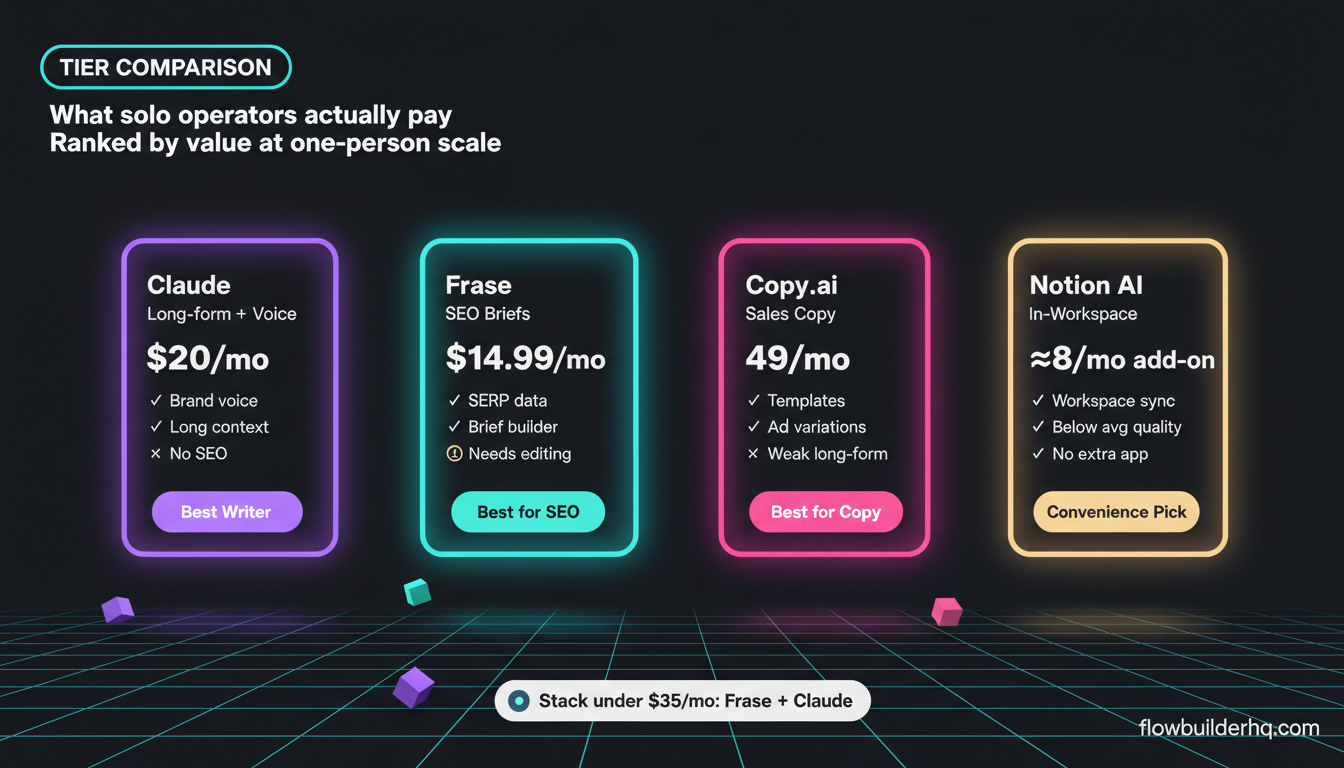
Pricing: Free tier available. Claude Pro runs around $20/mo. Check Anthropic’s current pricing for API access rates, which vary by model.
Best for: Long-form blog posts, email sequences, content that needs a distinct voice.
Hard con: No built-in SEO tooling. You will need to pair Claude with a separate keyword research or optimization tool. The free tier also rate-limits during peak hours in a way that disrupts flow.
2. Copy.ai
Copy.ai has moved well beyond its original short-copy roots. The 2026 version includes workflow automation features (called “GTM AI Workflows”) that let solopreneurs chain content tasks — think: research input → blog draft → social snippets — without touching a separate automation platform for basic jobs.
For direct-response copy specifically — ads, landing pages, cold emails — Copy.ai’s template library still outperforms most competitors for getting to a first draft fast. The output is not always publish-ready, but it is consistently better structured than a blank-page start.
Pricing: Free tier available. Starter $49/mo ($36/mo on annual). Advanced $249/mo.
Best for: Sales copy, landing pages, ad variations, email campaigns at volume.
Hard con: The workflow features at the free and Starter tiers are limited enough that the real automation capability only kicks in at Advanced pricing — which is a steep jump for a solo operator. Long-form blog output quality lags behind Claude or Frase for SEO-focused content.
3. Frase
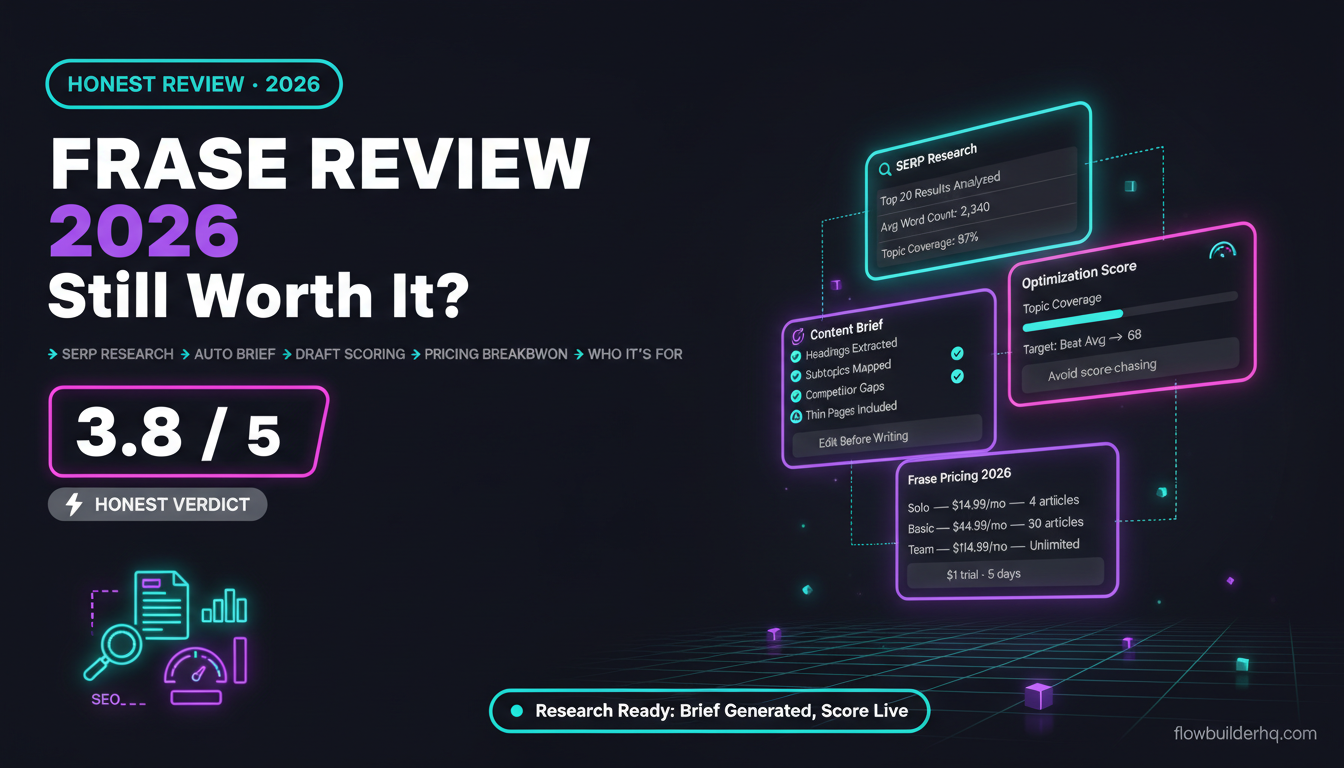
Frase is built around one job: write SEO content that ranks. It pulls live SERP data, builds content briefs based on what top-ranking pages cover, and gives you a real-time optimization score as you write. For solopreneurs running a content SEO strategy, this is the most tightly integrated research-to-draft tool in the market.
The brief builder alone is worth the price of entry if you are doing more than two or three SEO posts a month. Instead of manually pulling competitor pages and building a structure by hand, Frase gives you a topic map in under two minutes. The AI writer then fills against that structure — meaning the output starts from a grounded brief, not a generic prompt.
Pricing: Solo $14.99/mo. Basic $44.99/mo. Team $114.99/mo.
Best for: SEO blog content, content briefs, on-page optimization during drafting.
Hard con: The AI writer output itself is mediocre without significant editing. Frase earns its value from the research and brief infrastructure, not raw writing quality. If you are hoping to hit publish without a heavy editing pass, you will be disappointed. Also, the Solo plan limits you to four documents per month — low for anyone publishing weekly.
4. Surfer SEO (with AI)
Surfer’s AI writing feature is secondary to its core NLP optimization tooling, but the combination creates a workflow that is hard to beat for pure SEO output. You get real-time content scoring, keyword density guidance, and entity coverage tracking — plus an AI draft that starts from Surfer’s own outline builder.
The content score system is still one of the best feedback loops available for on-page SEO. Writing against Surfer’s live recommendations forces you to cover the topic more thoroughly than you might instinctively do, which tends to produce longer, better-ranking content.
Pricing: Check Surfer’s current pricing — plans vary and promotions run frequently.
Best for: On-page SEO optimization, content clusters, high-competition keyword targets.
Hard con: Surfer is priced for agencies and teams, not solo operators. The per-article cost model can make it expensive if you publish at volume. The AI writing itself is not a reason to subscribe — only the optimization layer is.
5. Notion AI
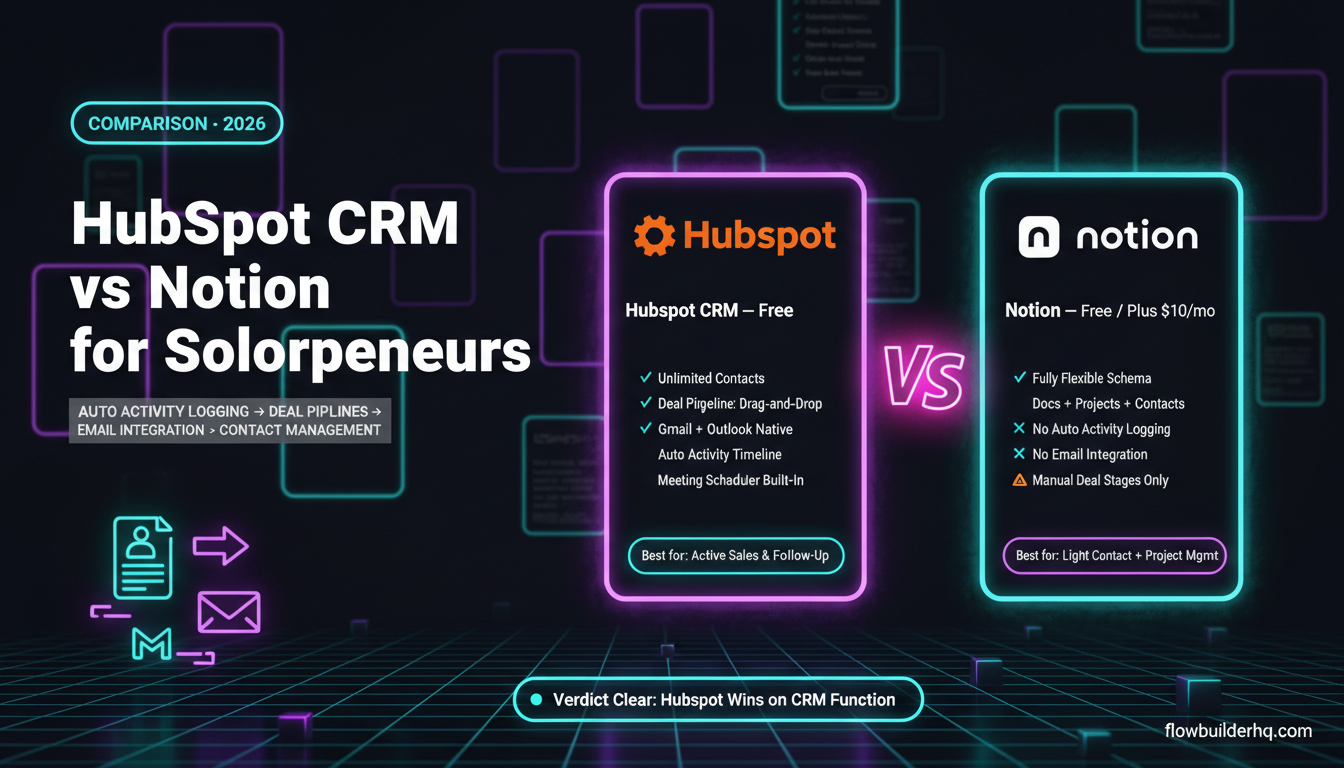
Notion AI earns its place on this list not because it produces the best writing output, but because it is embedded inside the tool most solopreneurs already use to manage their content calendar, CRM, and project planning. For anyone already on Notion, the AI add-on turns your existing knowledge base into an active writing resource.
The “ask your workspace” feature is practically useful. You can query your own notes, SOPs, and past content to draft new pieces that stay consistent with what you have already published or documented. For maintaining brand voice across a growing solo content library, this is a real advantage.
Pricing: Notion free. Plus $10/mo. Business $18/mo. Notion AI is an add-on at $8/mo per member on paid plans (check current pricing as add-on structure has shifted).
Best for: Solopreneurs already inside Notion who want AI without switching tools. Content planning, first drafts, internal documentation.
Hard con: Notion AI is not a specialist writing tool. Output quality for long-form SEO content or direct-response copy is clearly below Claude or Copy.ai. It is a convenience play, not a quality play.
6. ChatGPT (OpenAI)
ChatGPT still holds its place purely on ubiquity and flexibility. GPT-4o handles a wider range of content formats than almost anything else — structured articles, research summaries, social posts, scripts, email threads — and the Custom GPT feature lets you build persistent assistants tuned to your specific niche or voice.
For solopreneurs who need one tool that covers everything at a known price, ChatGPT Plus is the default choice. The web browsing capability also means you can pull in current data and competitor references without leaving the tool.
Pricing: Free tier. Plus $20/mo. Check OpenAI’s current plan page for API pricing if you are building automated content pipelines.
Best for: General-purpose writing, format variety, content research, building custom assistants.
Hard con: The output is the most recognizable AI-written content on the internet. Without heavy prompting and editing, ChatGPT output reads like ChatGPT output. Search engines are better at detecting it, readers are better at spotting it, and the default voice is aggressively neutral in a way that kills personality-driven content.
7. Pabbly Connect (for AI writing automation)
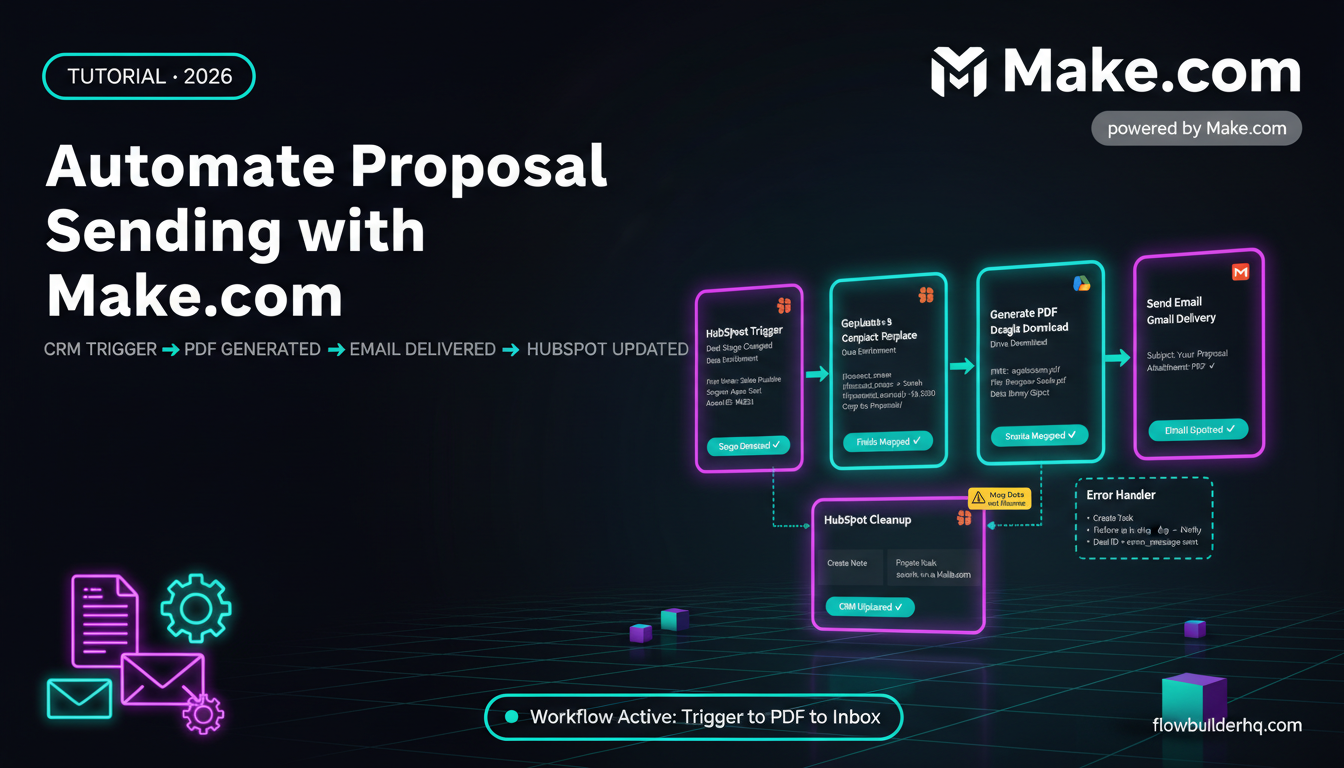
Pabbly Connect is not an AI writing tool itself, but it belongs on this list because it is the infrastructure layer that makes AI writing tools work at scale for solopreneurs on tight budgets. If you want to chain ChatGPT or Claude into a content pipeline — auto-drafting posts from an Airtable brief, pushing output to WordPress, notifying your team in Slack — Pabbly is the lowest-cost way to do it without ongoing per-task fees.
For solopreneurs whose AI writing workflow involves more than just a browser tab — API calls, multi-step automations, CMS publishing — Pabbly’s one-time pricing model makes it significantly cheaper than Zapier at equivalent volume. See how the best automation tools for solopreneurs stack up if you are building this kind of pipeline.
Pricing: One-time $99/year. Pro $179/year. Lifetime promos run frequently.
Best for: Automating content pipelines that involve AI writing APIs. Not a writing tool — an automation layer for your writing stack.
Hard con: No native AI writing features. You are essentially buying the plumbing, not the water. Requires API access to whichever AI tool you use, which adds cost and setup time.
Side-by-Side Comparison
| Tool | Best Use Case | Starting Price | SEO Built-In? | Long-Form Quality |
|---|---|---|---|---|
| Claude | Long-form, voice-driven content | Free / $20/mo | No | Excellent |
| Copy.ai | Sales copy, email, ad variations | Free / $49/mo | No | Moderate |
| Frase | SEO briefs + drafting | $14.99/mo | Yes | Moderate (needs editing) |
| Surfer SEO | On-page SEO optimization | Pricing varies | Yes | Moderate |
| Notion AI | In-workspace drafting | Add-on ~$8/mo | No | Below average |
| ChatGPT | Format variety, research | Free / $20/mo | No | Good (generic by default) |
| Pabbly Connect | Content automation pipelines | $99/year | No | N/A (automation layer) |
Which AI Writing Tool Should Solopreneurs Actually Use?
There is no single right answer — but there is a right framework. Start with what you publish most.
If you run an SEO content blog and publish weekly, the Frase + Claude combination is the most efficient stack right now. Frase handles research and brief structure; Claude handles the actual writing against that brief. The total cost is under $35/mo and the output quality beats any single-tool alternative at that price point.
If you sell products or services and your main output is copy — ads, landing pages, emails — Copy.ai at the Starter tier is the faster path to first drafts, especially if you are running A/B tests on multiple variations at once.
If you already live inside Notion and your content needs are light, Notion AI covers the basics without adding another subscription to the stack. Just do not expect it to compete with dedicated writing tools on output quality.
For solopreneurs building an automated content pipeline — AI drafts flowing into CMS, triggered by editorial calendar events — pair any of the above with a workflow tool. The automation approach used for client onboarding applies equally well to content workflows, and the same logic around trigger-action pipelines holds.
The Stack Most Solopreneurs End Up With
In practice, most solo content operators land on two or three tools that cover different jobs: one for research and SEO structure, one for actual writing quality, and one for automation if the volume justifies it. The mistake is paying for five tools that overlap on 80% of their features.
Pick your highest-leverage use case first. Match one tool to that use case. Add a second only when the first has a clear gap you are hitting regularly. The best AI writing tool for solopreneurs in 2026 is almost always the one you actually use, not the one with the most impressive demo.
For a broader look at where AI writing tools fit inside a full solo tech stack, see the complete automation tools roundup for solopreneurs.
Building this yourself? Get the workflow pack.
5 ready-to-import n8n workflows — lead capture, invoicing, content repurposing, onboarding, social posting. Free.