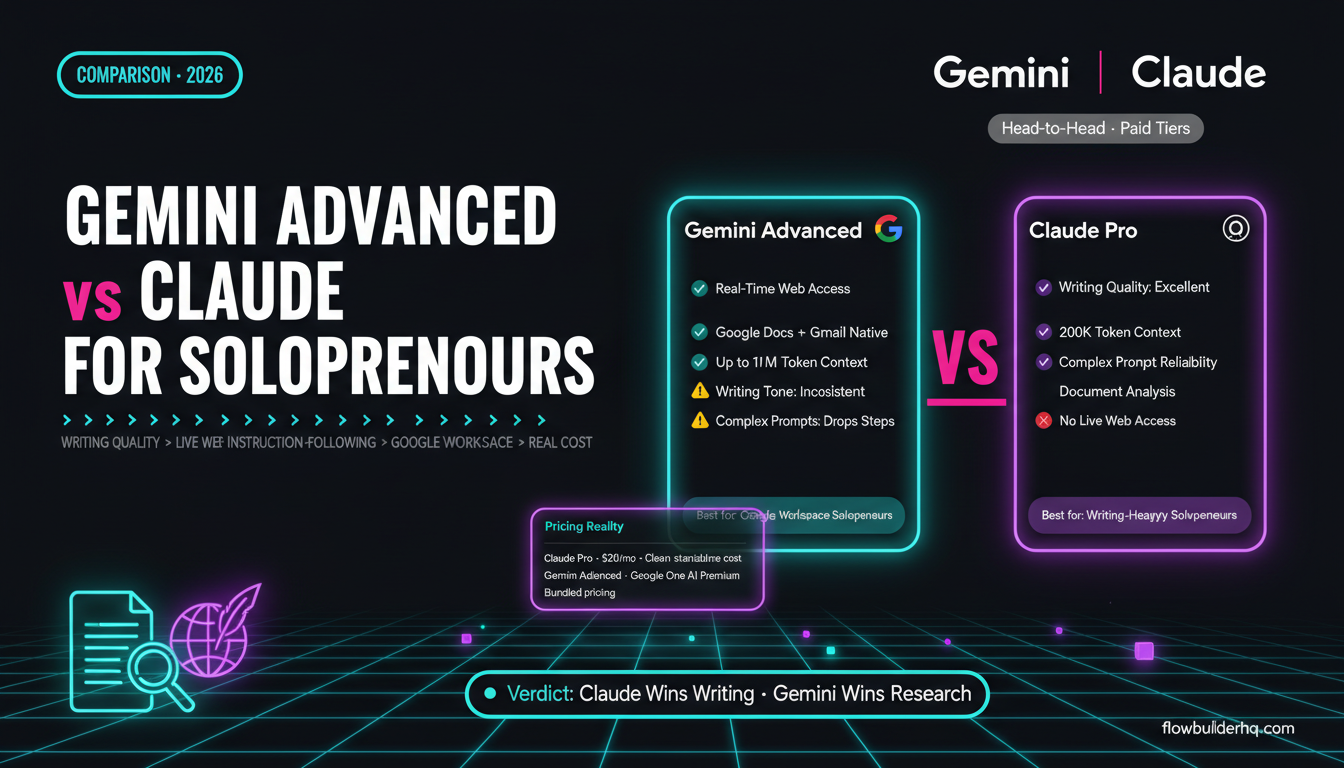
Jasper AI Review 2026: Is It Worth It When ChatGPT and Claude Exist?
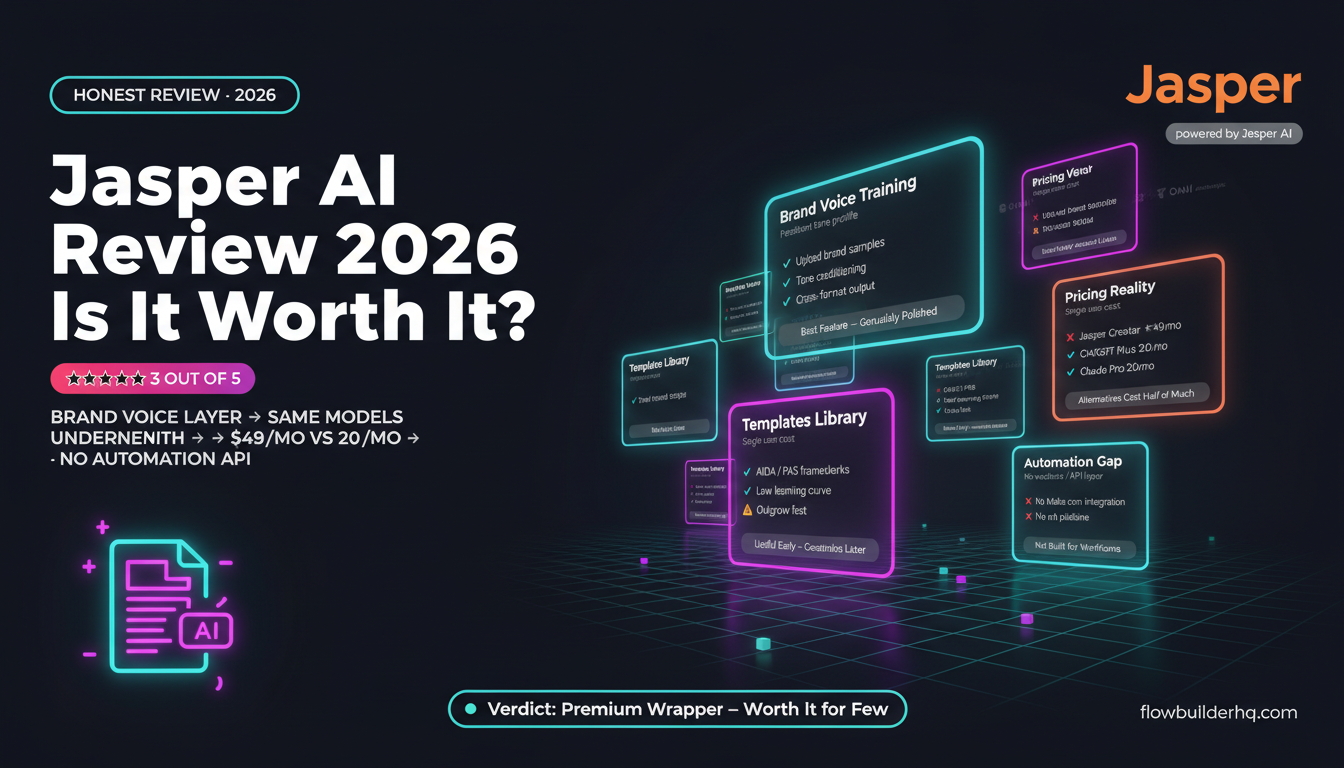
The honest question in this Jasper AI review 2026 is not whether Jasper writes decent copy. It does. The question is whether paying a premium for a dedicated AI writing platform still makes sense when OpenAI’s ChatGPT and Anthropic’s Claude are sitting right there, accessible for a fraction of the cost — or free. That’s the elephant in the room, and this review addresses it directly.
Jasper has pivoted its positioning significantly since 2023. It’s no longer selling “AI that writes for you.” It’s selling brand voice consistency, structured templates, and team collaboration — a content operations layer on top of the same LLMs you already have access to. Whether that wrapper is worth the price depends entirely on your situation.
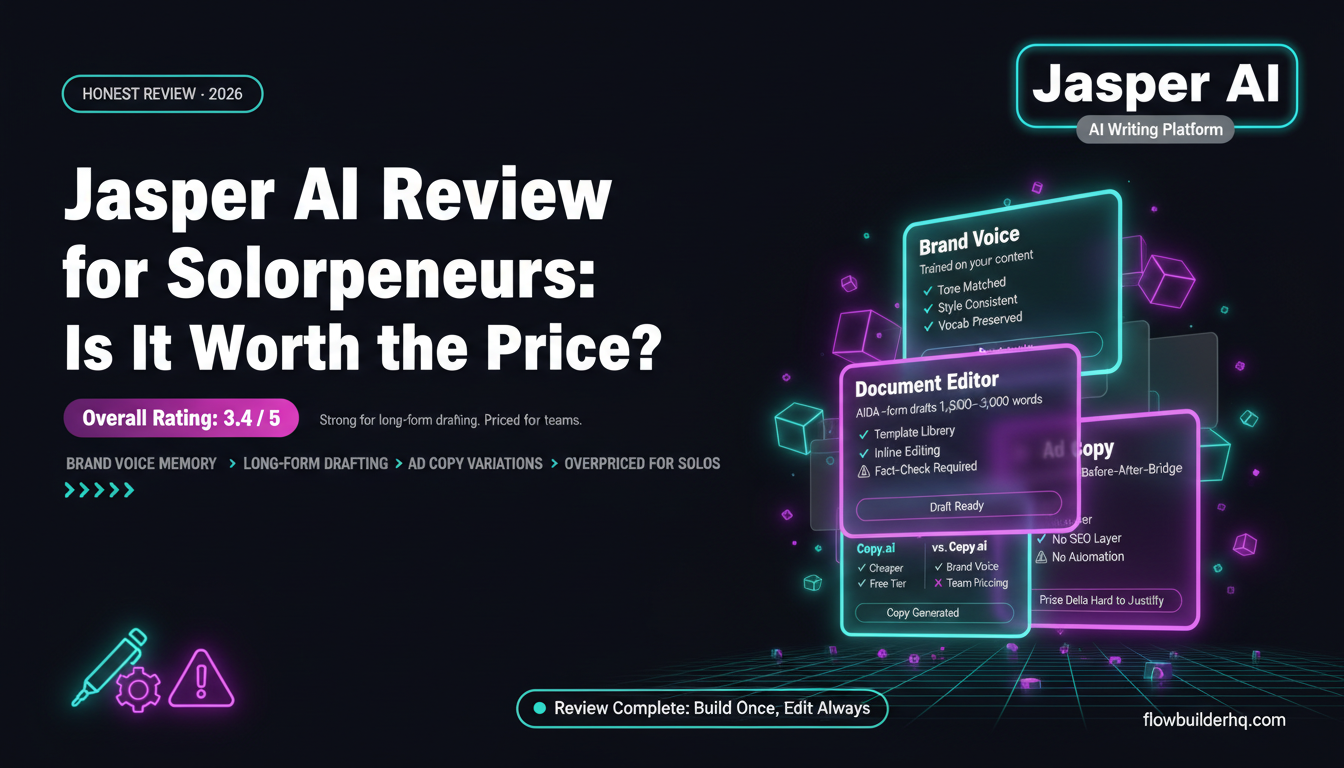
Verdict: 3 out of 5. Jasper is a solid product with genuine strengths, but for most solopreneurs, the cost-to-value ratio doesn’t hold up in 2026. There’s a specific profile where it earns its keep — and a much larger profile where it doesn’t.
What Jasper Actually Is in 2026
Jasper started as a GPT-3 wrapper with marketing templates. That was a compelling offer in 2021 when direct API access felt intimidating and the interfaces were rough. Today, Jasper runs on a combination of models — primarily GPT-4 class and some Claude integration — and positions itself as a “brand-safe AI platform” aimed at marketing teams.
The core product has three pillars that differentiate it from raw ChatGPT or Claude access:
- Brand Voice: You upload brand guidelines, sample content, and tone descriptors. Jasper uses these to condition outputs across all your content.
- Templates: Pre-built workflows for blog posts, ads, product descriptions, emails, and more — each with structured input fields.
- Team Features: Shared workspaces, campaign folders, and collaboration tools built for multi-person marketing teams.
For a solopreneur evaluating their 2026 tech stack, the team features are mostly irrelevant. That leaves brand voice and templates as the two things actually worth evaluating.
Jasper AI Review 2026: Pricing Reality Check
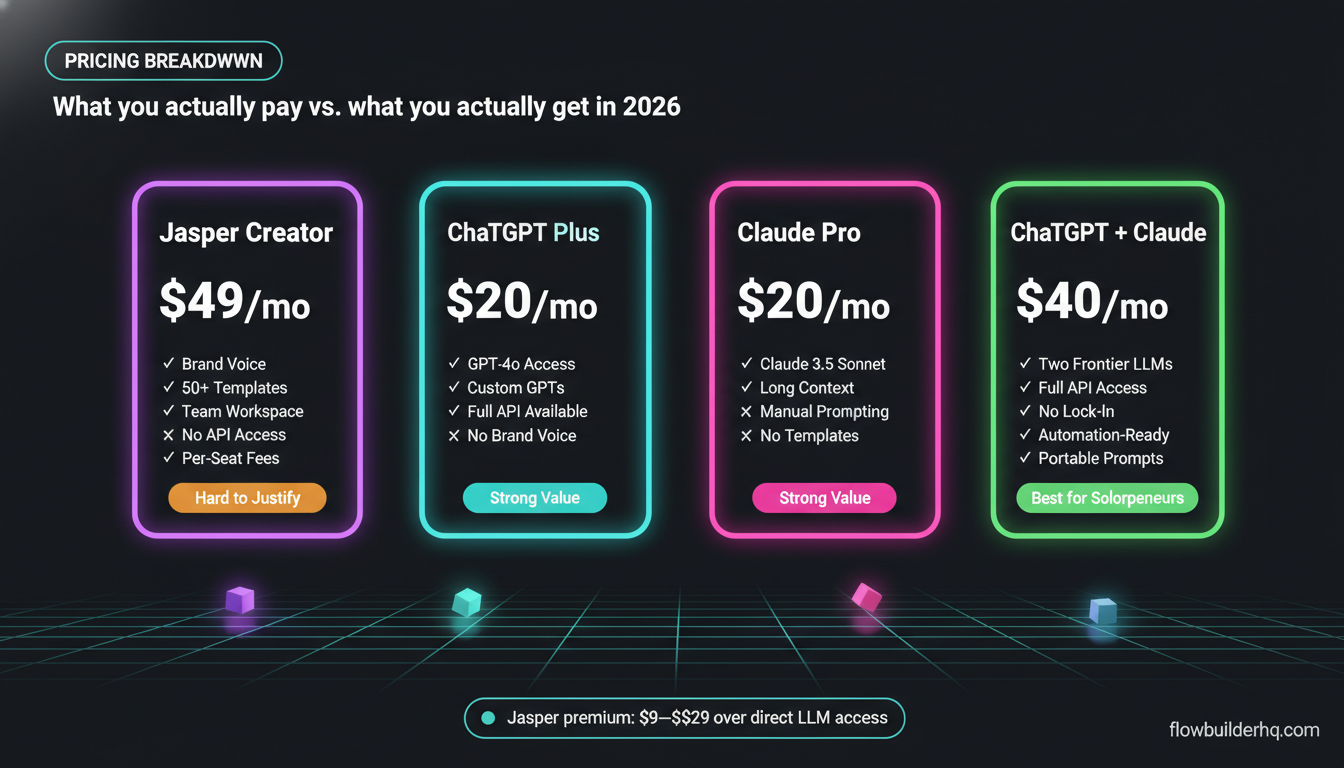
Jasper’s pricing is not listed in our standard pricing table because it changes frequently and varies by seat count. Check current pricing directly on Jasper’s site. What’s known publicly: the Creator plan for individuals typically runs around $49/month, and the Pro plan (which adds brand voice and more seats) runs higher. Team plans are priced per seat.
Compare that to the alternatives. Anthropic’s Claude Pro is $20/month and gives you direct access to one of the most capable writing models available. ChatGPT Plus is also $20/month. For around $40 total, you have two frontier LLMs with no template constraints, no platform lock-in, and no seat fees.
If you want to see how those raw APIs stack up for actual automation work, the Claude API vs OpenAI API comparison covers the technical tradeoffs in detail. But for day-to-day writing without API integration, the consumer products are the relevant comparison.
The pricing math already starts to favor the alternatives. Jasper needs to justify its premium entirely through the quality of its brand voice system and the productivity gains from its templates.
Brand Voice Training: Where Jasper Has a Real Edge
This is Jasper’s strongest feature and the most defensible part of its value proposition. The brand voice system lets you train a persistent voice profile by feeding it existing content — blog posts, email sequences, ad copy, anything that represents your brand’s established tone. Jasper then applies that profile across outputs without you having to re-explain it every session.
That’s a genuine workflow advantage for one specific scenario: a business that produces high volumes of content across multiple formats and needs consistency without constant prompt engineering. Think an e-commerce brand pushing out hundreds of product descriptions a month, or a content agency managing multiple client voices.
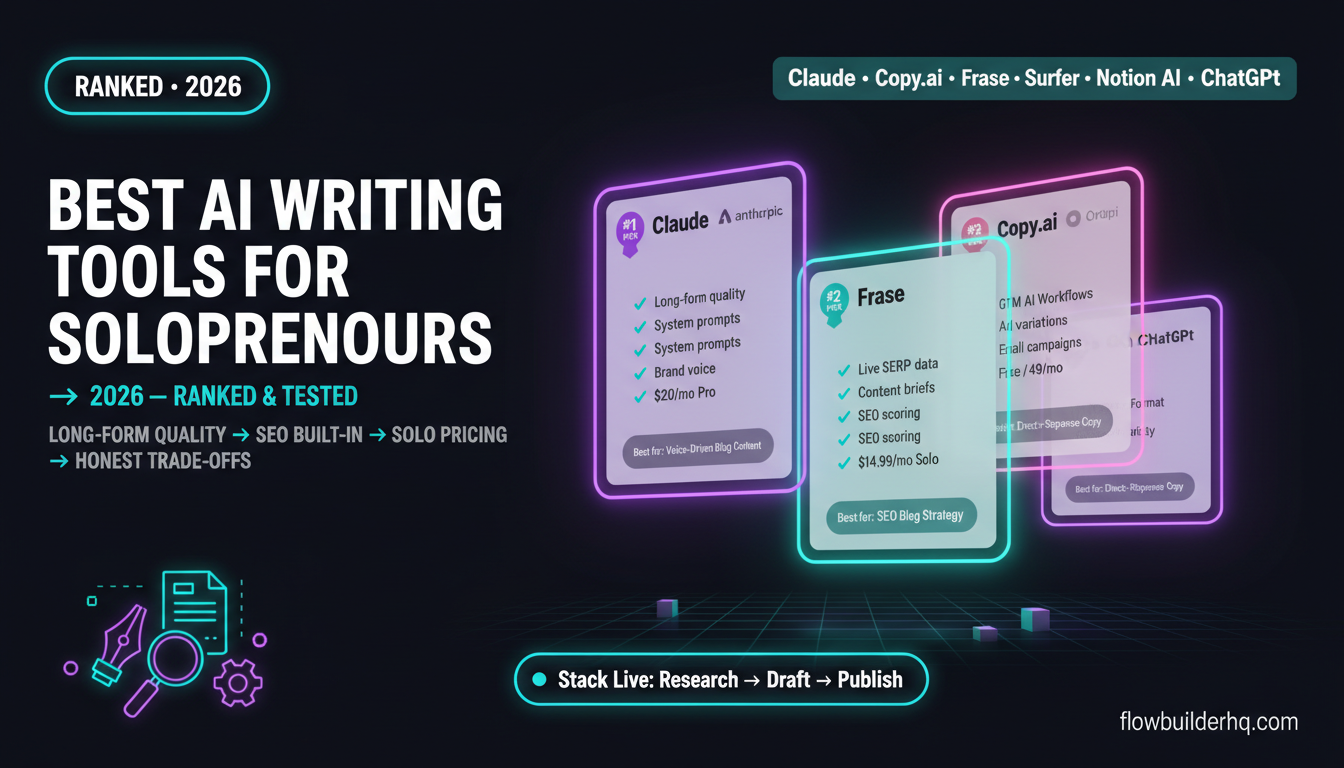
For a solopreneur producing one or two blog posts a week? The brand voice system is arguably overkill. A well-crafted system prompt in Claude or a custom GPT in ChatGPT achieves a similar result with a one-time setup cost. The best AI writing tools for solopreneurs in 2026 covers this in more depth — the conclusion there mirrors what surfaces here: solopreneurs rarely need a dedicated brand voice layer.
That said, Jasper’s implementation is polished. The voice profiles are more structured than a raw system prompt, and the interface makes it easy for non-technical users to manage without touching any settings that look like code. If you’re not comfortable crafting detailed prompts, Jasper’s guided approach has real value.
Templates: Productivity Shortcut or Golden Cage?
Jasper has dozens of templates — AIDA frameworks, PAS frameworks, Facebook ad copy, product descriptions, email subject lines, blog outlines. They work. The structured input fields (product name, target audience, tone, call to action) reduce the thinking required to start a piece of content.
The problem is that templates also constrain. Once you know what you’re doing with AI writing, the templates start to feel like a rigid scaffold when you’d rather build freeform. Experienced AI users frequently outgrow template-based tools because they develop their own prompt patterns that produce better results for their specific needs.
For someone new to AI writing — genuinely new, not just uncomfortable — Jasper’s templates are an excellent on-ramp. They model good prompt structure implicitly. But that’s a temporary advantage. Most users will hit the ceiling within a few months and find themselves working around the templates rather than with them.
This mirrors a pattern seen across AI tool categories. Wrapper tools provide structure at the cost of flexibility. That tradeoff makes sense early in the learning curve; it stops making sense once you’re past it. If you want to understand what it looks like to build that flexibility yourself, the Claude API guide for solopreneurs shows how much you can build without a developer.
Where Jasper Falls Short
Output Quality Is Not Differentiated
Jasper’s outputs are generated by the same underlying models you can access directly. There is no proprietary model advantage. The quality ceiling is set by GPT-4 and Claude — and Jasper doesn’t lift it. In direct output comparisons, Jasper’s results are indistinguishable from well-prompted ChatGPT or Claude sessions. The platform does not make the AI smarter; it makes it more accessible.
The SEO Features Are Weak
Jasper includes a “Surfer SEO” integration and some basic SEO mode features, but these are thin. For actual SEO-oriented content work, dedicated tools like Frase — which builds content briefs directly from SERP data — do this far better. Jasper’s SEO layer feels like a checkbox feature rather than a core capability.
No Automation Integration Story
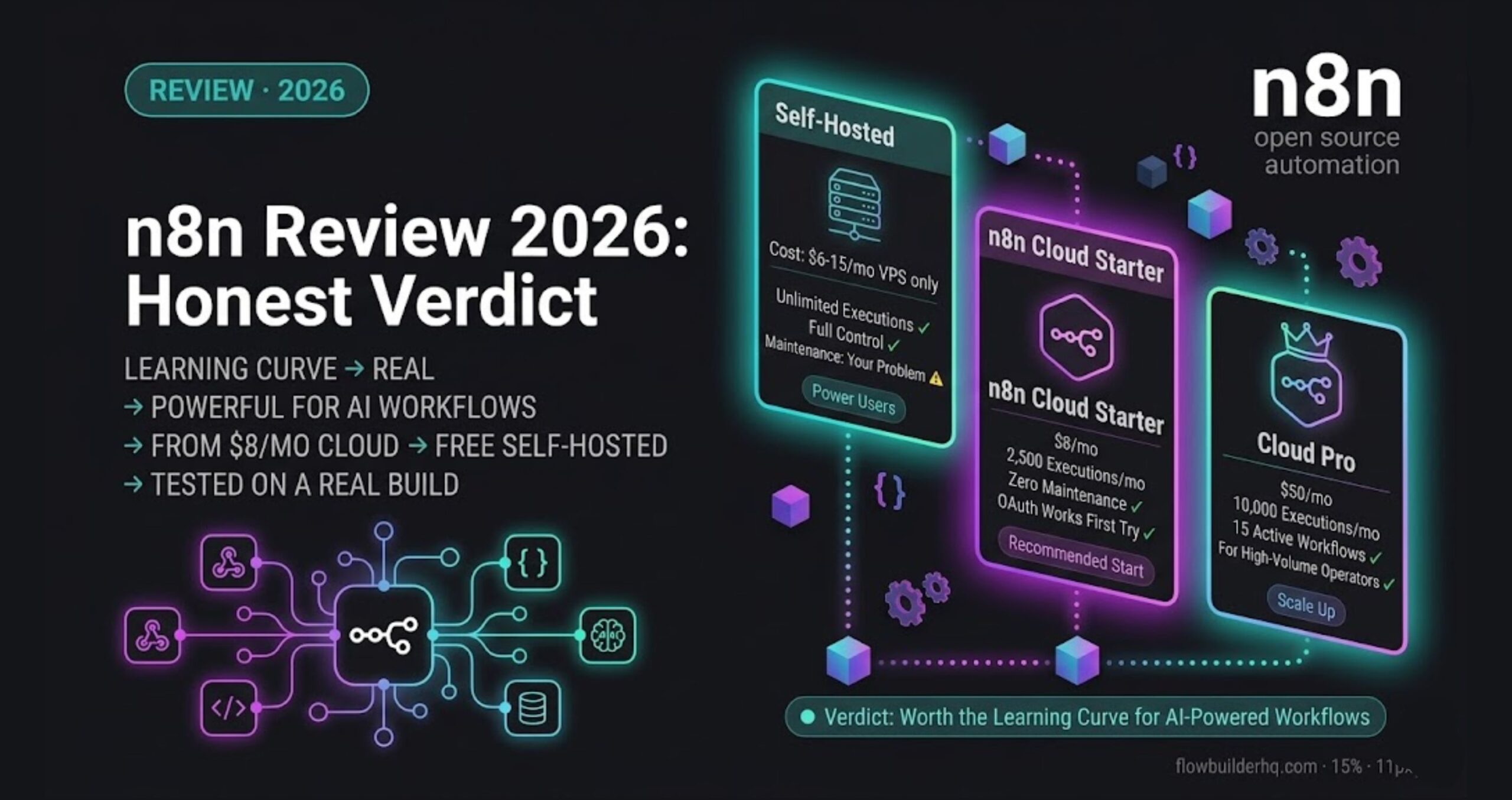
Jasper doesn’t have a meaningful API or webhook layer that plugs into automation stacks. If you’re running content workflows through Make.com or n8n — connecting form submissions to content generation to publishing pipelines — Jasper isn’t part of that story. The OpenAI and Anthropic APIs are. This is a significant limitation for anyone trying to automate content operations rather than just write faster. The Make.com content creator workflow guide shows what’s possible when you have real API access underneath.
The Price Compounds Fast on Teams
For a 3-5 person team, Jasper’s per-seat pricing adds up quickly. At that scale, you’re paying more than you would for direct API access through a shared workspace, with more flexibility and no per-seat fees. The best tools stack under $50 a month demonstrates how much operational capability is available at price points well below what Jasper charges.
Jasper vs ChatGPT vs Claude: The Direct Comparison
| Feature | Jasper (Creator/Pro) | ChatGPT Plus | Claude Pro |
|---|---|---|---|
| Monthly cost (single user) | ~$49–$69+ | $20 | $20 |
| Brand voice training | Yes (structured) | Custom GPTs (manual) | System prompts (manual) |
| Content templates | 50+ structured templates | Custom GPTs / prompts | Manual prompt patterns |
| Underlying model quality | GPT-4 class / Claude | GPT-4o | Claude 3.5/3.7 Sonnet |
| API / automation access | Limited | Full API (separate cost) | Full API (separate cost) |
| Team collaboration | Yes (per-seat) | Team plan available | Team plan available |
| SEO integration | Basic (Surfer add-on) | None native | None native |
| Learning curve | Low | Medium | Medium |
The table makes the tradeoff visible. Jasper wins on accessibility and structure. It loses on price, flexibility, and automation integration. For a deeper look at how the two major LLMs compare for business tasks specifically, the ChatGPT vs Claude comparison for solopreneurs is the most relevant read.
Who Should Actually Use Jasper in 2026
There’s a real Jasper user. It’s just a narrower group than Jasper’s marketing suggests.
Jasper makes sense if:
- You’re managing 3+ distinct brand voices across multiple clients or product lines
- Your team includes people who are not comfortable with direct LLM interfaces and won’t invest time in learning prompt patterns
- You’re producing genuinely high content volume — think 20+ pieces per month — where template-guided production creates measurable time savings
- You need audit trails and content governance that raw ChatGPT doesn’t provide
Jasper does not make sense if:
- You’re a solo operator producing content for a single brand voice
- You’re comfortable with ChatGPT or Claude at even a basic level
- You want to build automated content workflows (Jasper isn’t wired for this)
- Budget is a constraint — you’re paying a $30–$50/month premium for features you’ll use partially
The honest profile of most FlowBuilderHQ readers is: solopreneur or small team, capable with tools, building toward automation. That profile doesn’t need Jasper. The Copy.ai review for 2026 covers a comparable tool that faces the same competitive pressure from native LLMs — and arrives at a similar conclusion.
The Three Honest Cons
1. You’re Paying for a Layer Over Tools You Already Have
This is the central problem. Jasper doesn’t give you access to a better model. It gives you a structured interface over models you can access cheaper or free. Once that clicks, the premium is hard to justify unless the structure genuinely saves you more time than the cost.
2. The Value Prop Requires High Output Volume to Materialize
Brand voice consistency and template speed pay off at scale. At low-to-medium content volume — where most solopreneurs operate — the ROI window is too narrow. You’d need to produce enough content that the per-piece time savings adds up to something material. Most solo operators don’t hit that threshold.
3. Platform Dependency Without Portability
Your brand voice profiles, templates, and campaign history live inside Jasper. When you cancel or if Jasper raises prices (which it has done), you lose that infrastructure. The same brand voice work done in a documented system prompt is fully portable — it works in any LLM interface or API call. Understanding common automation mistakes includes this pattern: building on platforms that hold your configuration hostage.
Final Verdict
This Jasper AI review 2026 lands at a 3 out of 5. The product works. The brand voice system is genuinely well-built. The templates lower the floor for new AI writing users. But in a world where ChatGPT and Claude exist at $20/month each, Jasper’s premium is hard to defend for most solopreneurs.
The use cases where Jasper earns its price — high-volume multi-brand content operations with non-technical team members — are real, but narrow. Most solo operators and small teams are better served by getting comfortable with direct LLM access, building their own prompt patterns, and using the cost difference to invest in actual automation infrastructure.
If you want to understand what the underlying models can actually do before deciding whether you need a wrapper, start with the Claude AI for business automation guide. And if you’re building a content workflow that goes beyond writing — distribution, repurposing, scheduling — see how automating content repurposing with Make.com connects the pieces without any per-seat AI writing fees.
Jasper is not a bad product. It’s just a product that made more sense before the models it wraps became this capable and this accessible. In 2026, that context matters.
Building this yourself? Get the workflow pack.
5 ready-to-import n8n workflows — lead capture, invoicing, content repurposing, onboarding, social posting. Free.