Perplexity AI vs ChatGPT for Solopreneur Research and Content Workflows: Which One Actually Fits Your Work?
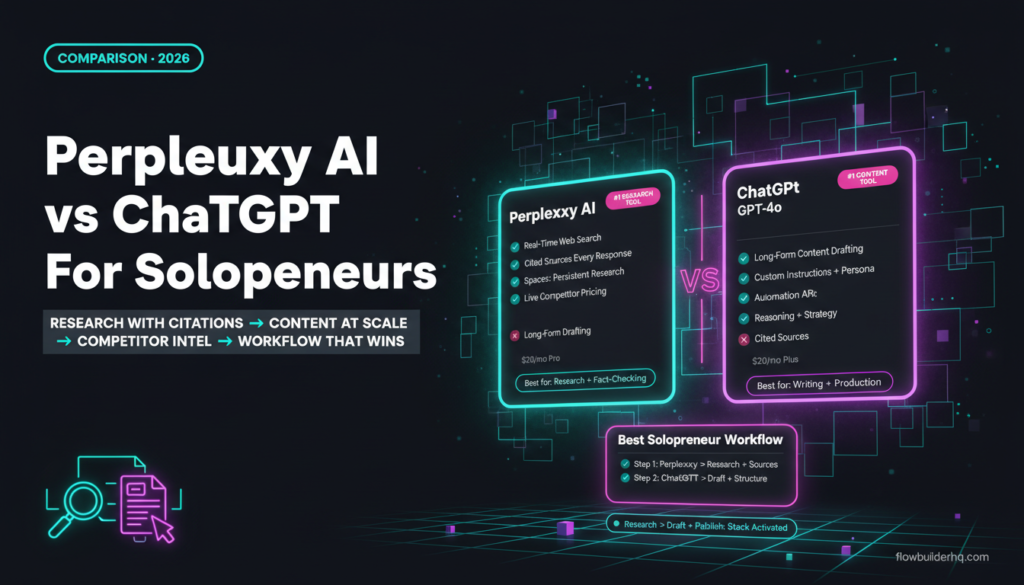
ChatGPT writes. Perplexity researches. That one-line summary is mostly accurate — but it breaks down fast once you start using both tools inside real content and research workflows. The question isn’t which one is better. It’s which one handles which job, and whether you actually need both on your stack.
This comparison is built around how solopreneurs use AI tools day-to-day: competitor research, content briefs, topic discovery, drafting, and the constant context-switching that defines a one-person operation. The verdict isn’t “use this one forever.” It’s a map of when each tool earns its keep in perplexity ai vs chatgpt for solopreneur research and content workflows.
What Each Tool Is Actually Built To Do
Perplexity is a search-first AI. Its core loop is: take a query, pull live web results, synthesize them with citations, and return a sourced answer. You can see exactly where it got its information. It’s not trying to write your blog post. It’s trying to answer your question with evidence.
ChatGPT is a generation-first AI. Its core loop is: take a prompt, use its training data (plus browsing or plugins in paid tiers), and produce text. It’s extraordinarily flexible — draft emails, write outlines, rewrite copy, answer questions, roleplay as a persona, build workflows. The range is wide. The sourcing is often murky.
That difference in architecture shapes everything else about how you’d use them. Perplexity is better when you need to know what’s true right now. ChatGPT is better when you need something written, structured, or reasoned through. Knowing which mode you’re in before you open a tab saves real time.
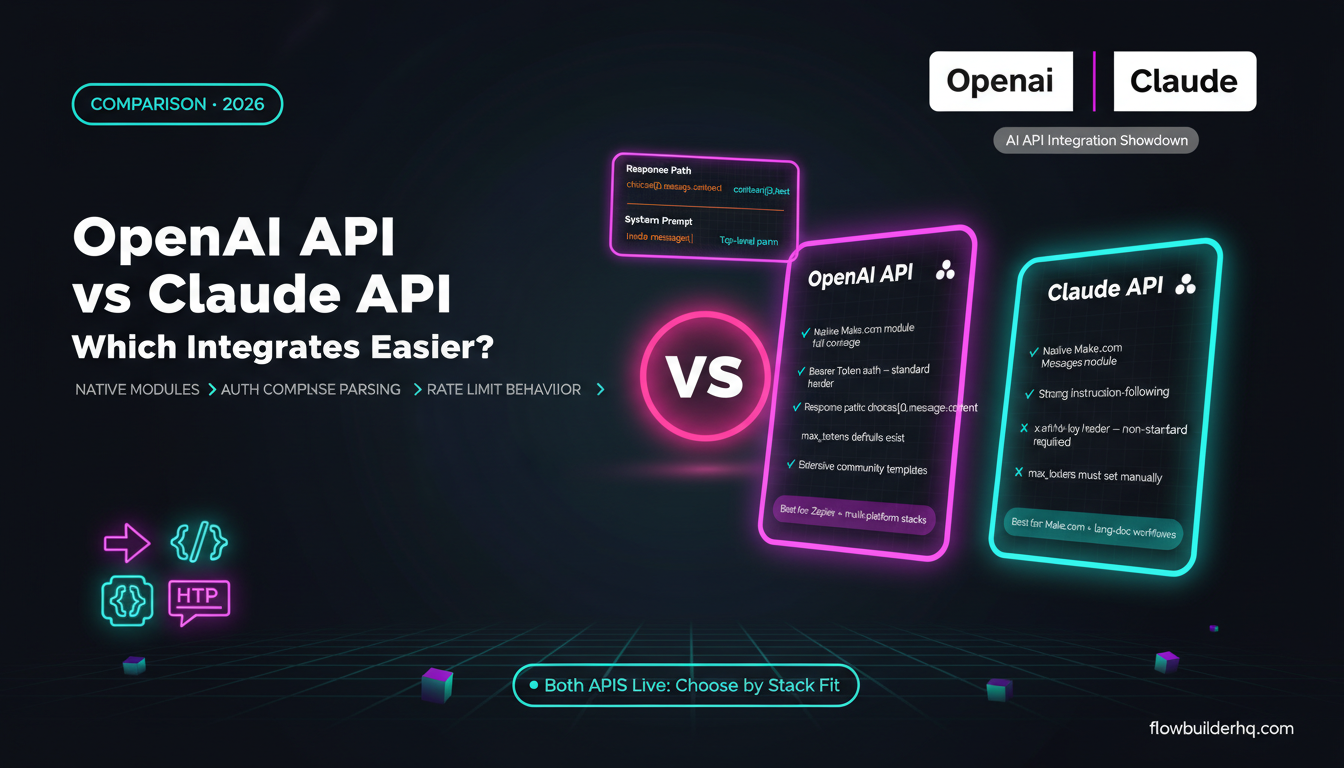
If you’re already thinking about how these tools slot into your broader AI stack, the ChatGPT vs Claude comparison covers the generation-side tradeoffs in more detail — this post focuses specifically on the research and content workflow angle.
Perplexity AI: What It Gets Right for Solopreneurs
Real-Time Research With Citations
Perplexity’s biggest practical advantage is that it tells you where it got its information. When you’re researching a topic for a client deliverable, a content brief, or a competitor analysis, you can click through to the source, verify the claim, and cite it yourself. That’s not a small thing. ChatGPT will confidently state things that are outdated or simply wrong, with no trail to follow.
For current events, pricing research, product launches, recent studies, or anything with a timestamp attached — Perplexity is faster and more trustworthy. The Perplexity AI platform indexes live web content by default, so you’re not hitting a training cutoff wall the way you do with a base ChatGPT session.
The “Spaces” Feature for Ongoing Research Projects
Perplexity’s Spaces (available on Pro) let you create persistent research environments around a topic. You can upload documents, add URLs, and run repeated queries inside a scoped context. For a solopreneur working on a multi-week project — say, a market research report for a client or a content series on a niche topic — this is genuinely useful. It keeps related research together instead of scattered across browser tabs.
Speed for Specific Factual Queries
Ask Perplexity “What are the current pricing tiers for HubSpot?” and you get a sourced answer in seconds. Ask ChatGPT the same question and you might get outdated information presented as current, or a caveat that it doesn’t have real-time data (depending on which version you’re using and whether browsing is enabled). For rapid-fire factual queries during a research session, Perplexity has a clear edge in reliability.
Honest Cons of Perplexity
- It’s not a writer. Perplexity will generate summaries and answers, but it’s not built for long-form content creation. Asking it to write a 2,000-word blog post produces mediocre results compared to what ChatGPT (or Claude) delivers.
- The free tier is limited. You get basic search functionality for free, but Spaces, file uploads, and advanced models are behind the Pro paywall at $20/month.
- Source quality varies. Perplexity pulls from what’s indexed and available. It can surface Reddit threads and low-quality sites alongside authoritative ones. You still need to evaluate what you’re citing.
- Prompt engineering doesn’t transfer. The structured prompting you’ve built for ChatGPT doesn’t map cleanly to Perplexity. It’s a different interaction model — more like a search engine than a conversation partner.
ChatGPT: What It Gets Right for Solopreneurs
Content Generation at Scale
For drafting, editing, rewriting, and structuring content, ChatGPT is still the baseline that most tools get compared to. GPT-4o handles long-form well. It maintains tone across a document, responds to style instructions, and can iterate on drafts in a way that feels like working with a capable editor. If you’re producing content as part of your business — articles, newsletters, social posts, client deliverables — ChatGPT is the workhorse.
There’s a full breakdown of the best AI writing tools for solopreneurs if you want to see how ChatGPT stacks up against dedicated writing tools. But in the context of this comparison, the writing gap between ChatGPT and Perplexity is significant.
Custom Instructions and Persona Consistency
ChatGPT’s custom instructions feature lets you set a persistent context — your business, your tone, your audience, your constraints — that applies across all conversations. For solopreneurs who work across multiple clients or content types, this cuts setup time dramatically. You don’t re-explain your voice every session.
Perplexity has no equivalent to this. Every session starts fresh with no persistent persona context.
Reasoning and Synthesis for Complex Problems
When you need to think through a business problem, outline a strategy, or work through a decision — ChatGPT’s conversational reasoning is better suited to the task than Perplexity’s search-and-summarize model. GPT-4o’s extended thinking mode (available in paid tiers) is particularly useful for multi-step problems where you want the model to show its work before landing on a recommendation.
For the API and integration side of things, the OpenAI API vs Claude API comparison covers what happens when you want to build these capabilities into your own workflows rather than just use the chat interface.
Automation Integration
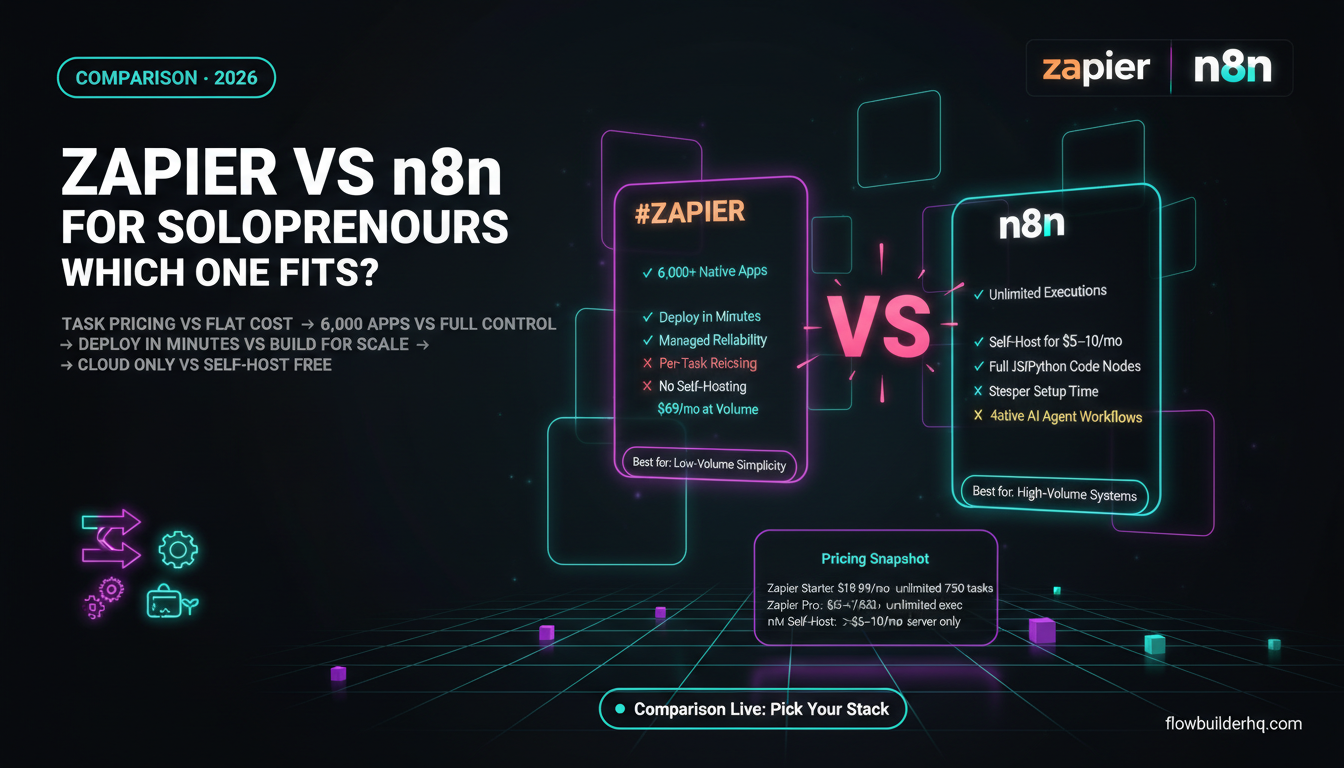
ChatGPT’s API is more mature, more widely supported in automation tools, and has more community templates than Perplexity’s. If you’re connecting AI to your workflows via Make.com, n8n, or Zapier — OpenAI’s API is the default integration most solopreneurs reach for. Perplexity does have an API, but it’s less common in no-code automation stacks.
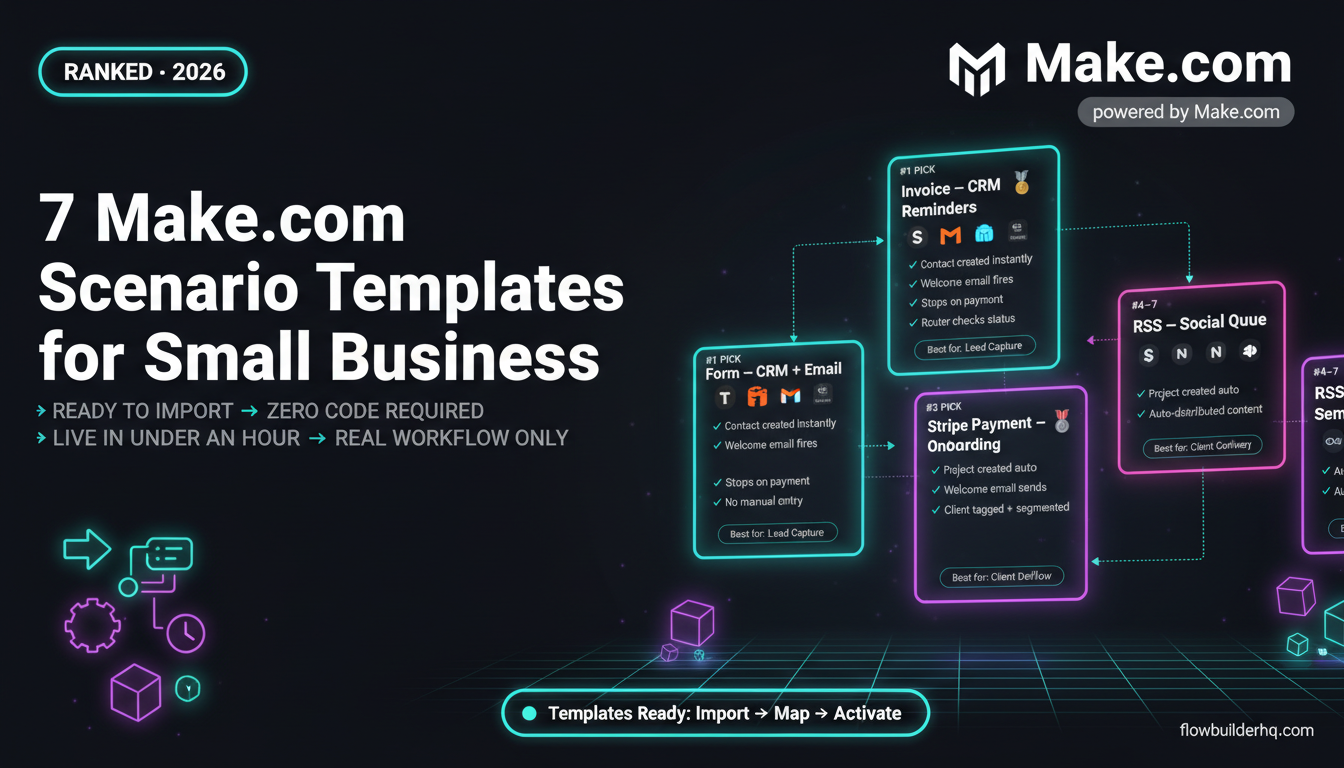
If you’re thinking about plugging AI into your content or research workflows through automation, check out how content repurposing automation with Make.com works in practice — most of those workflows use ChatGPT-style generation at the core.
Honest Cons of ChatGPT
- Hallucination is real. ChatGPT will state incorrect facts confidently, especially on current events, specific statistics, or anything that changed after its training cutoff. Treat everything factual as needing verification.
- Browsing is inconsistent. The web browsing feature in ChatGPT Plus works, but it’s slower than Perplexity, occasionally fails to load pages, and still doesn’t produce the source-linked summaries Perplexity does naturally.
- Cost adds up. ChatGPT Plus is $20/month. If you also want Perplexity Pro, you’re at $40/month combined. For a solopreneur watching costs, that’s a real consideration.
- Context window limitations in practice. Even with a large context window, ChatGPT can lose coherence in very long sessions. If you’re feeding in lengthy research documents, output quality can degrade mid-conversation.
Feature Comparison Table
| Feature | Perplexity AI | ChatGPT (GPT-4o) |
|---|---|---|
| Real-time web search | ✓ Core feature, always on | ✓ Available but inconsistent |
| Cited sources | ✓ Every response | ✗ Rarely, even with browsing |
| Long-form content drafting | ✗ Not built for it | ✓ Strong |
| Custom instructions / persona | ✗ No persistent context | ✓ Custom instructions supported |
| Persistent research spaces | ✓ Spaces (Pro) | ✗ Projects feature is basic |
| Automation API support | Limited | ✓ Widely supported |
| Free tier usefulness | Moderate (basic search) | Limited (GPT-3.5 on free) |
| Pricing (paid) | $20/month Pro | $20/month Plus |
| File/document upload | ✓ Pro only | ✓ Plus and above |
| Hallucination risk | Lower (sourced) | Higher (unsourced generation) |
Perplexity AI vs ChatGPT: Workflow-by-Workflow Breakdown
Competitor Research
Use Perplexity. When you need current information — what a competitor just launched, their current pricing, recent press coverage — Perplexity is faster and more reliable. You get sourced results you can verify. ChatGPT might give you accurate information, or it might give you information that was accurate six months ago. For live competitive intelligence, that’s an unacceptable risk.
Content Brief Creation
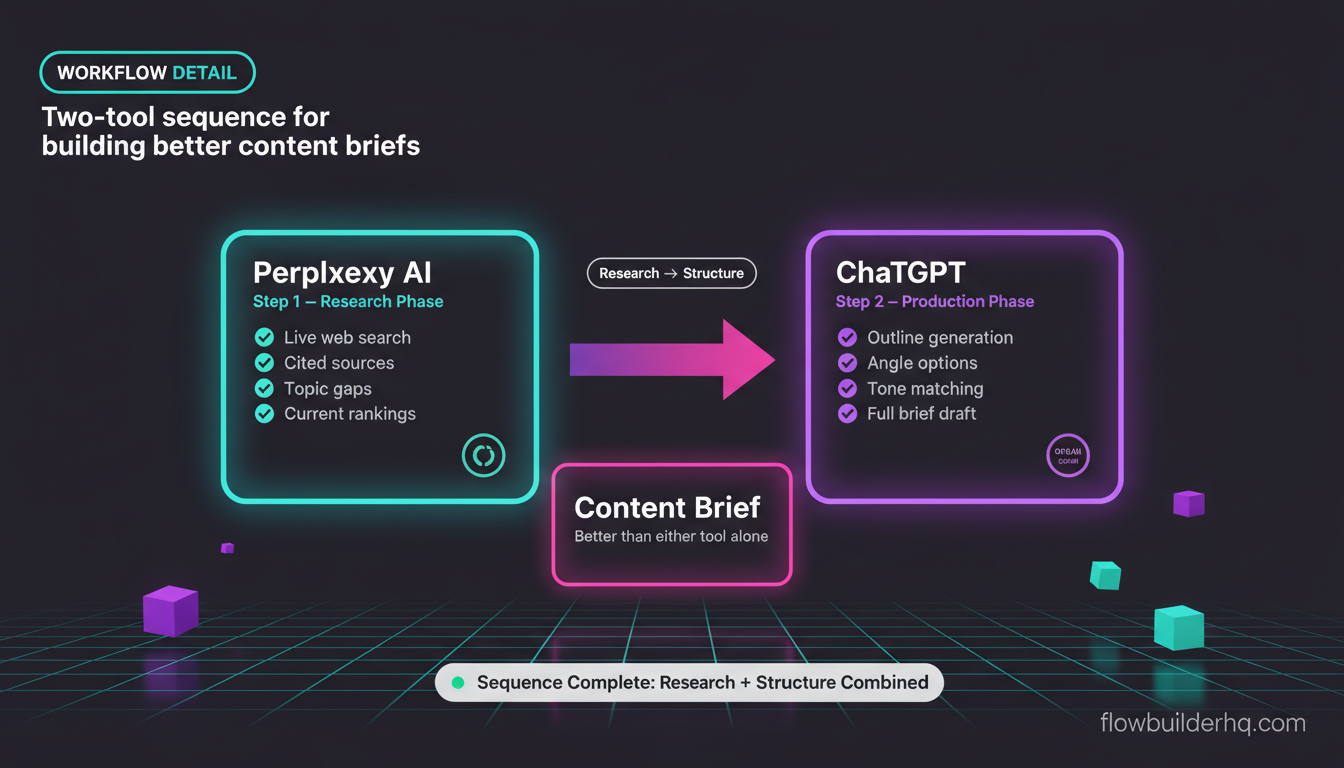
Use both, in sequence. Start with Perplexity to pull current search results, understand what’s already ranking, and gather source material on the topic. Then move to ChatGPT to structure that raw research into an outline, generate angle options, and produce the actual brief. This two-step process produces better briefs than either tool alone.
If you’re optimizing content specifically for SEO, the Frase vs Surfer SEO comparison covers tools built specifically for that job — the brief creation workflow there complements what you’d do with Perplexity and ChatGPT.
Article Research and Fact-Checking
Use Perplexity. Before publishing anything that makes factual claims, run the key assertions through Perplexity. The citations give you a starting point for verification. Don’t just trust the summary — click the sources. But having sources at all puts Perplexity far ahead of asking ChatGPT “is this true?”
First Draft Writing
Use ChatGPT. Feed it your research, your outline, your tone notes, and let it draft. The gap in long-form writing quality between ChatGPT and Perplexity is large. Perplexity’s output tends toward listicle-style summaries. ChatGPT can write in your voice, match a specific format, and sustain quality across a 2,000-word piece.
Topic Discovery and Content Ideation
Perplexity has a real edge here. Query Perplexity about what people are asking around a topic, and it returns current search results — including forum threads, recent articles, and “people also ask” style questions drawn from live data. For finding gaps in existing content coverage, this is more accurate than ChatGPT’s training-data-based suggestions.
Client-Facing Deliverables
Use ChatGPT for the output. If you’re producing a report, proposal, or analysis for a client, ChatGPT’s formatting and prose quality is better suited for polished deliverables. Use Perplexity for the research phase, then produce the final document in ChatGPT. The Claude AI for small business post covers another strong option for polished client-facing content — Claude and ChatGPT are competitive here, but both outperform Perplexity on document production.
Market Research Reports
Use both — and be skeptical of both. Perplexity handles the data-gathering phase well. ChatGPT handles synthesis and narrative. But for anything going to a paying client, treat both as starting points, not finished sources. Verify key statistics through primary sources. Neither tool replaces actual research; both make it faster.
The Pricing Math for Solopreneurs
Both tools charge $20/month for their paid tiers. Running both simultaneously costs $40/month — call it the equivalent of a few hours of contractor time. Whether that’s worth it depends on how frequently you hit the limits of each tool’s free tier.
Perplexity’s free tier gives you basic search with limited daily Pro queries. It’s usable for occasional research. ChatGPT’s free tier now uses GPT-4o-mini in most cases, which is noticeably weaker for complex tasks. If writing quality matters to your output, the $20/month for ChatGPT Plus pays for itself quickly.
The more realistic scenario for a budget-conscious solopreneur: start with ChatGPT Plus ($20/month) for writing, and use Perplexity’s free tier for research. Upgrade Perplexity to Pro when you’re running up against free-tier limits regularly — which for heavy research users happens within the first week of real use.
For a broader view of AI tool cost across a solopreneur stack, the automation tools overview for solopreneurs covers how to think about AI spending alongside your automation budget.
Who Wins? An Honest Pick
There’s no universal winner because they’re not competing for the same job. But if you’re forced to pick one:
If your primary use case is content production — drafting, editing, structuring, and publishing — start with ChatGPT Plus. The writing quality difference is real, and it integrates better with the automation tools most solopreneurs already use.
If your primary use case is research-heavy work — competitive analysis, client research, topic discovery, fact-checking before publication — Perplexity Pro earns its keep. The cited sources alone change how you work with AI-generated information.
The actual best answer: use Perplexity for research, ChatGPT for production. The two-tool workflow takes about a week to feel natural, and it’s meaningfully better than trying to force either tool to do the other’s job.
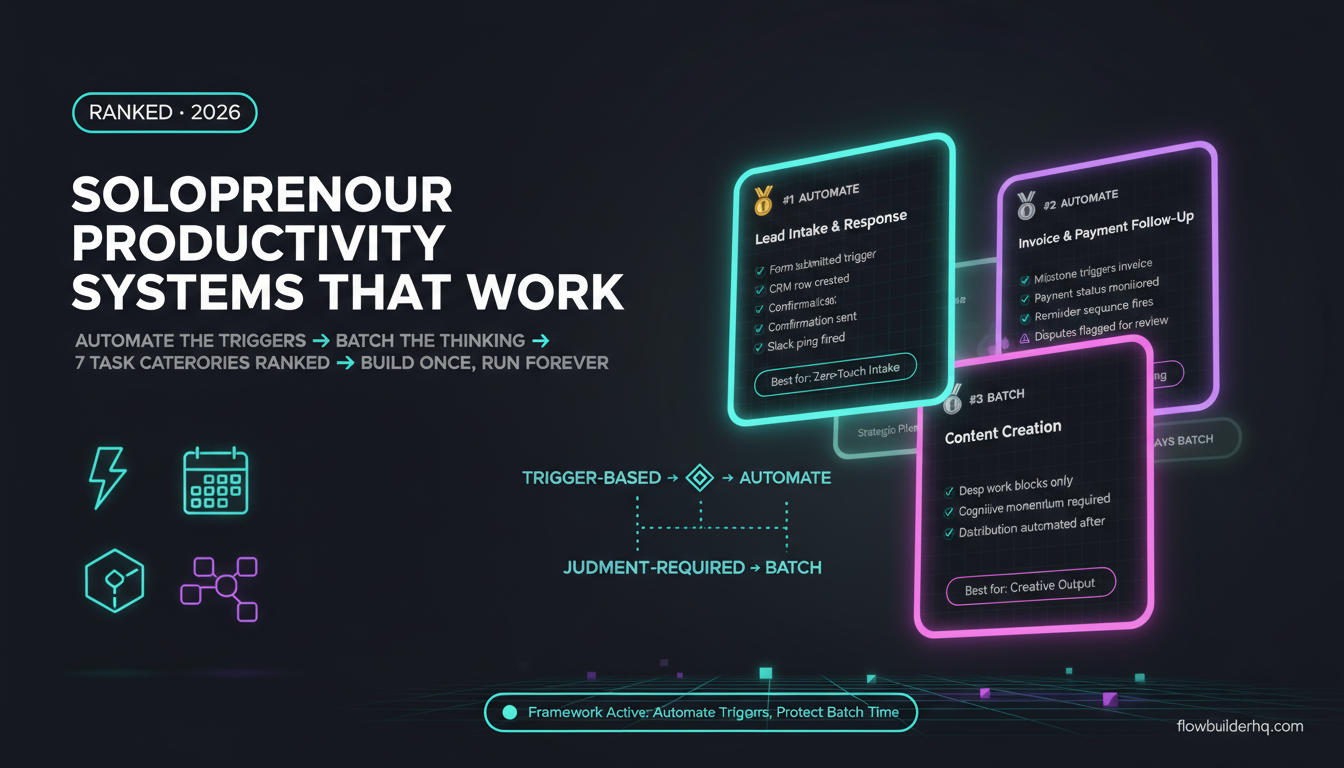
If you’re thinking about where AI fits inside a broader workflow — not just for content but for client work, lead generation, and operations — the workflow automation prioritization framework is worth reading before you build anything more complex around these tools.
One More Thing: Don’t Overlook Claude
This comparison has focused on Perplexity vs ChatGPT specifically, but Claude (Anthropic’s model) is worth naming as a third option for solopreneurs who do a lot of long-form writing and nuanced reasoning. It doesn’t have Perplexity’s live search, but it’s competitive with or better than GPT-4o on certain writing tasks. The Claude API for solopreneurs post covers what you can actually build with it.
For pure research workflows, Perplexity still leads. For writing, the ChatGPT vs Claude decision is worth its own investigation — covered in detail in the ChatGPT vs Claude comparison already published here.
Bottom Line
Perplexity AI and ChatGPT solve different problems. Perplexity is the research tool that finally gives AI output a paper trail. ChatGPT is the production tool that can write, structure, and reason across almost any content format. The strongest solopreneur content workflow uses both — Perplexity to know what’s true, ChatGPT to turn that into something publishable.
Pick the one that solves your current biggest bottleneck. Then add the other when the gap it fills becomes obvious. For most solopreneurs, that moment comes faster than expected.
For more on how AI tools slot into automated content workflows, see how no-code automation saves time for service businesses — the AI research and writing layer described here connects directly to the automation patterns covered there.
Building this yourself? Get the workflow pack.
5 ready-to-import n8n workflows — lead capture, invoicing, content repurposing, onboarding, social posting. Free.